

Quick Answer
White gums after tooth extraction can appear when the wound starts producing new healing tissue. A pale coating over the socket is often expected during recovery and usually changes as the gums continue closing. Pain that becomes stronger, increasing swelling, fever, foul odor, or exposed bone may indicate that professional dental care is needed.
Key Takeaways
- White coloring can develop naturally during early socket healing.
- The protective clot and new tissue both play important roles in recovery.
- Avoid touching or trying to remove material attached to the wound.
- Gentle cleaning and low-chew foods can make recovery easier.
- A sudden increase in symptoms is a reason to contact your dentist.
Patients often expect an extraction wound to stay red until it closes. In reality, white gums after tooth extraction are a common change during recovery.
The mouth repairs itself in stages, and each stage can make the socket look somewhat different.
What Causes the White Appearance?
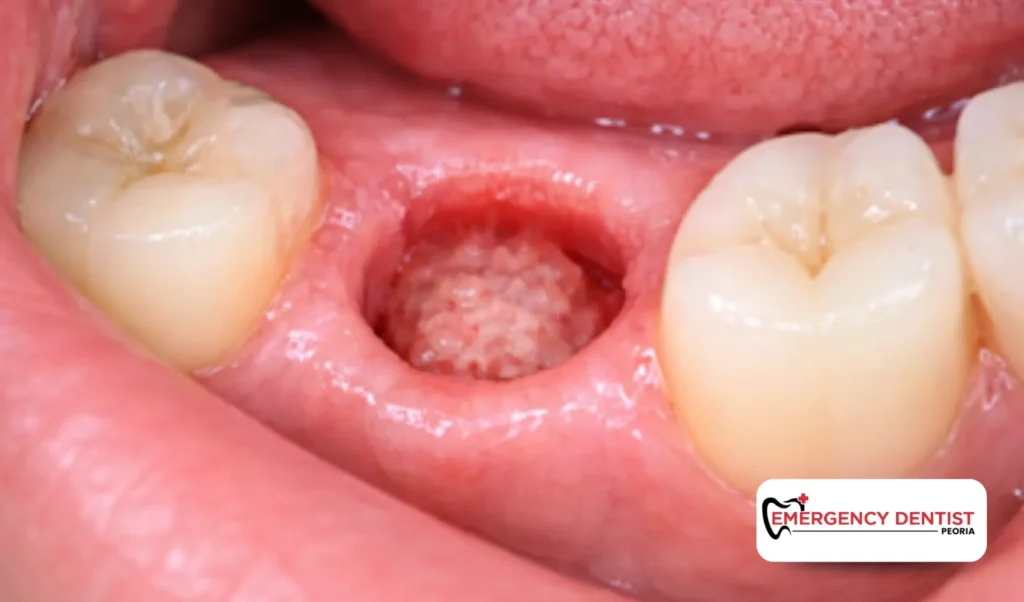
Soon after the tooth comes out, a clot fills the open space. This early covering helps protect the underlying bone and tissues while healing begins.
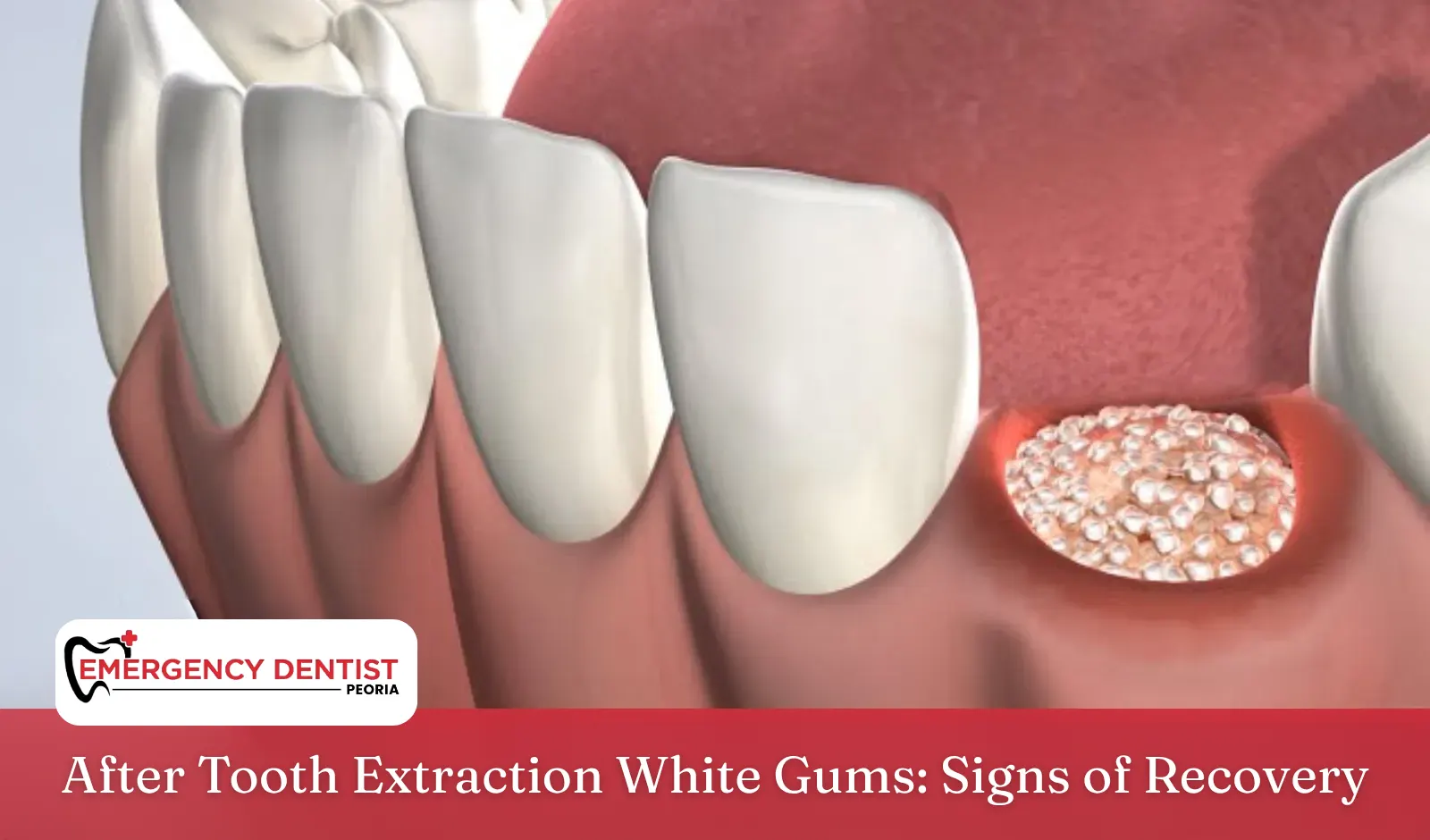
The body then begins producing granulation tissue. This developing layer contains collagen, cells involved in repair, and tiny blood vessels.
Because this material is lighter than normal gums, it may make the extraction area look cream, white, or pale yellow. This is often part of the healing process.
As recovery progresses, healthier gum tissue gradually grows across the opening.
What Is Happening Beneath the Surface?
The body sends nutrients and repair cells to the wound. White blood cells also gather in the area as part of the body’s natural defense response.
These changes allow tooth extraction healing to move from an early clot toward stronger tissue.
During this time, the tooth extraction site may look uneven or have a pale coating. This does not necessarily mean something has gone wrong.
The opening can be especially noticeable following wisdom teeth removal, since those extraction wounds may be larger.
Related: Wisdom Tooth Extraction Recovery: How Healing Happens
When Should the White Area Concern You?
Consider how you feel as well as how the socket looks.
Possible signs of infection can include fever, drainage, increasing swelling, and discomfort that continues to intensify. A lasting bad taste or unpleasant smell can also occur when the wound needs attention.
Dry socket is different from routine soreness. It may develop when the protective clot does not form properly, becomes dislodged, or breaks down too early, potentially leaving visible bone and causing significant pain.
Another possibility is food debris. Small food particles may collect inside an extraction opening and resemble a pale healing layer.
Do not attempt to scrape material out of the wound. If you are unsure whether you are seeing food or healing tissue, your dentist can check it safely.
Protecting Your Mouth While It Heals

During the first day, avoid rinsing aggressively or disturbing the wound.
After the first 24 hours, you can usually rinse gently with warm salt water unless your dentist gives you different instructions.
Eat foods that place little pressure on the area. Smooth soups, yogurt, scrambled eggs, oatmeal, and mashed potatoes are common options.
Brush the rest of your mouth normally but carefully. Do not scrub the socket or remove attached white tissue.
You should also avoid smoking, drinking through straws, and forceful spitting. These activities may create suction that affects the clot.
Good aftercare cannot guarantee that complications will never happen, but it can help the wound heal properly.
Related: Best Food for After Wisdom Tooth Removal for Smooth Recovery
When to Speak With a Dental Professional
Some discomfort is expected shortly after the procedure. The overall trend should be toward improvement.
Call your dentist if you experience worsening pain, fever, growing swelling, persistent bleeding, or an unpleasant smell from the wound.
Prompt assessment can identify whether symptoms are related to normal recovery, dry socket, infection, or another issue.
Final Thoughts
A white extraction area is frequently a temporary stage of recovery. The wound will continue changing as the gums rebuild and the socket becomes smaller.
Protect the area rather than trying to make it look clean by scraping or picking at it.
Has Your Extraction Recovery Taken an Unexpected Turn?
A change in appearance may be harmless, but discomfort that suddenly increases or fails to improve can tell a different story.
An Emergency Dentist in Peoria can assess how the wound is progressing and identify problems that may be interfering with recovery. Arrange an emergency dental visit if your symptoms have changed or are becoming harder to manage.
Frequently Asked Questions
Why does my extraction socket look white but not hurt?
A pale socket without increasing pain can be part of normal recovery. New healing tissue often looks lighter than the surrounding gums while it develops.
Does dry socket always look white?
No. You cannot diagnose dry sockets by color alone. Strong or increasing pain is an important warning sign, and the socket may look empty or show exposed bone.
What should I do if food enters my extraction socket?
Do not dig into the socket. Follow your dentist’s instructions for cleaning the area, which may include gentle rinsing after the first 24 hours. Contact the office if something remains trapped or causes discomfort.